
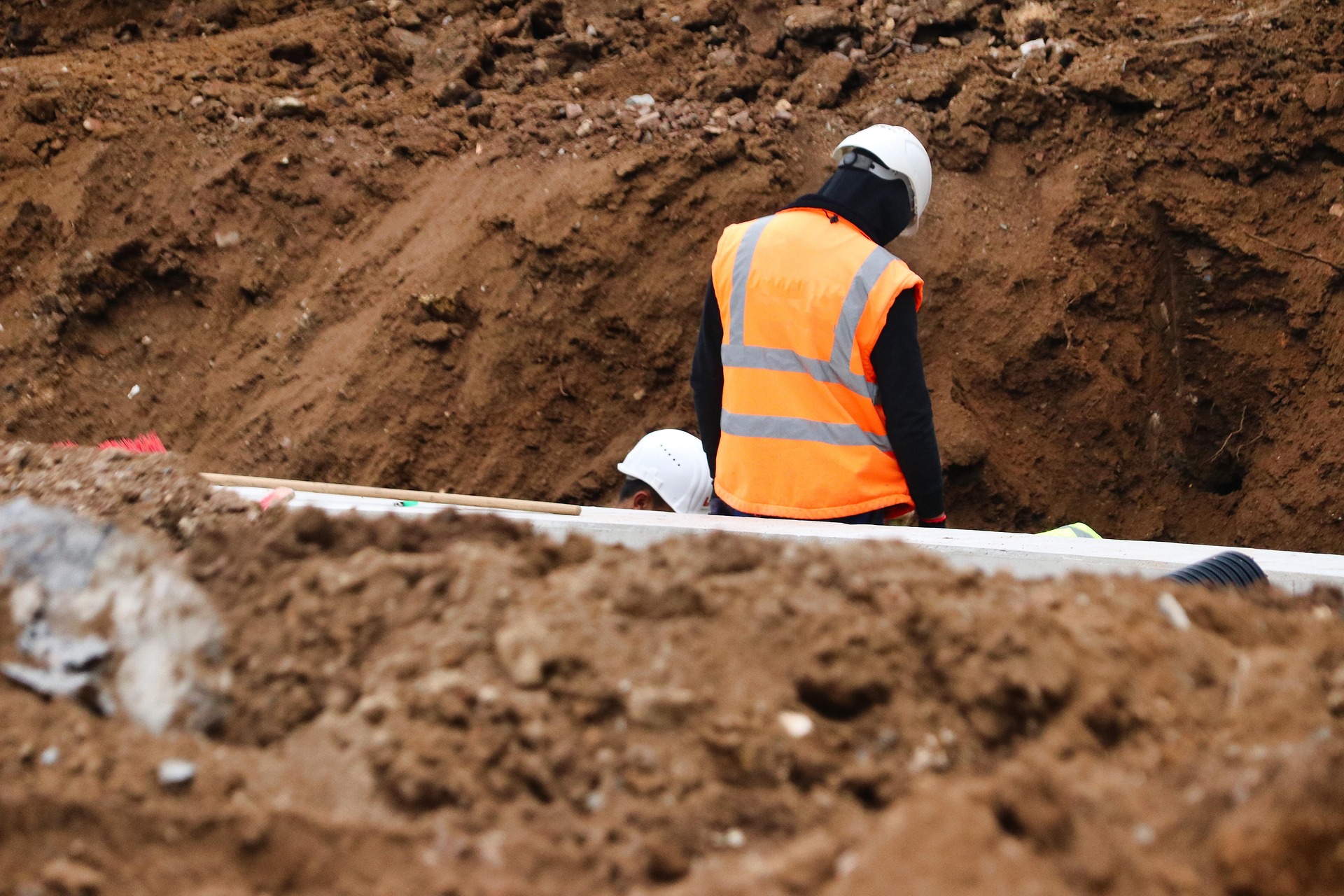
Bali stands on one of the most geologically diverse islands in Southeast Asia. The soil conditions in Bali shift dramatically over short distances, from loose coastal sand in Kuta and Seminyak, to expansive clay across the central plains, to hard limestone along the Uluwatu cliffs, and to volcanic deposits in the northern highlands. Understanding these variations is essential before you plan any construction project on the island.
Because Indonesia sits at the convergence of three major tectonic plates, as recorded in the USGS earthquake map of the Indonesian region, ground conditions here are shaped by both seismic activity and volcanic geology. No two plots in Bali behave the same, and that is precisely why every project needs its own professional soil test before construction begins.
Bali’s Geological Diversity: Why Soil Conditions Vary So Much
Bali’s geology results from millions of years of volcanic eruptions, tectonic uplift, and coastal sedimentation. Consequently, you will find entirely different soil types within just a few kilometres of each other. The central mountains, dominated by active and dormant volcanoes such as Mount Agung and Mount Batur, produce fine volcanic ash and lapilli that spread outward and downslope over time.
As this material weathers and travels, it creates a layered subsurface that varies dramatically by elevation, drainage, and proximity to the coast. Understanding the dominant soil conditions in Bali at your specific location is the starting point for every safe foundation design.
What Is a Soil Test? A Basic Guide Before You Build
Soil Testing, Soil Strength, and Types of Soil
Sandy Soil in Bali’s Coastal Areas
Coastal zones including Kuta, Seminyak, Canggu, Legian, and Berawa sit on alluvial sandy soil that has accumulated over centuries through river deposition and beach processes. This type of soil is characterised by large particle sizes, high permeability, and very low cohesion. In practical terms, it means the ground offers limited resistance to structural loads.
Furthermore, saturated sandy soil in these areas carries a significant liquefaction risk. According to the USGS, liquefaction occurs when loosely packed, water-logged sediments lose their strength during strong ground shaking, causing major damage to buildings and infrastructure above. Since Bali sits in a seismically active region, this risk is not theoretical. It is a documented engineering concern that your structural engineer must address.
Therefore, construction in these coastal areas typically requires deep pile foundations, which must reach the denser soil layer beneath the loose sand. A soil test, specifically a Cone Penetration Test (CPT), is essential to identify the depth of that stable layer before you design the foundation.
Soil Test for Berawa Signature Project, Canggu
Soil Test Investigation: Residential Project in Canggu
Soil Test in Seminyak and Kerobokan
Clay Soil on Bali’s Central Plains and Lowlands
Moving inland from the coast, the soil conditions in Bali shift toward finer-grained materials. Clay and silt predominate in the flat agricultural plains of Tabanan, Gianyar, and parts of Badung. Clay soil behaves very differently from sandy soil, and in many ways it presents its own set of challenges for construction.
Clay is cohesive and retains moisture, which means it is prone to shrinking during dry seasons and swelling during wet seasons. This volume change generates differential settlement under buildings, which causes cracking in walls and floors over time. Additionally, soft clay has a low shear strength, meaning it cannot reliably support heavy structural loads without the risk of shear failure.
According to the ISSMGE Technical Committees, investigation of compressible fine-grained soils requires both field testing and laboratory analysis to characterise their consolidation behaviour accurately. A boring test (SPT) with laboratory sample analysis is often the appropriate approach for clay-dominated sites in Bali’s lowland areas.
Not Sure What Soil Type You Are Building On?
Contact Indo Soil today for a free consultation. We identify your specific soil conditions in Bali and recommend the right investigation method before you commit to any foundation design.
Limestone Rock in the Bukit Region
The Bukit Peninsula in south Bali, which includes Uluwatu, Pecatu, Jimbaran, and Nusa Dua, sits on a raised limestone plateau. This coral limestone, also called karst terrain, looks solid on the surface. However, it can conceal significant subsurface voids, solution channels, and uneven rock surfaces that create unpredictable bearing conditions for foundations.
Karst terrain presents a specific risk because the rock below your site may have cavities dissolved by water movement over thousands of years. A foundation bearing on competent rock in one area may be directly adjacent to a void in another. Consequently, standard visual assessment of a cliff or hilltop site tells you very little about what lies beneath.
For this type of ground, Indo Soil recommends a combination of CPT testing and geoelectric survey to map subsurface variations before drilling. According to ASTM D5778-20, CPT provides detailed cone resistance records useful for evaluating depth to firm layers, voids, and other subsurface discontinuities. This standard is directly applicable to the investigation of limestone terrain in the Bukit area.
Geotechnical Analysis for Luxury Cliff Villas in Bali
Soil Test Investigation: Pecatu, South Kuta, Bali
Volcanic Soil in North Bali and Highland Areas
Northern Bali, including areas around Singaraja, Lovina, and the highlands of Kintamani, Bedugul, and Penelokan, features volcanic soil derived from centuries of eruption activity. Mount Agung and Mount Batur have both contributed layers of ash, pumice, lapilli, and solidified lava flows that create a complex, stratified subsurface.
Volcanic soil is not inherently weak. However, it is highly variable. Compressibility, permeability, and bearing capacity can change significantly within a single plot depending on the sequence of eruptive deposits below. Additionally, volcanic ash layers can be prone to collapse when saturated with water, a condition that makes them particularly hazardous in Bali’s wet season.
For highland and northern Bali projects, Indo Soil conducts CPT testing and boring investigations to identify each distinct layer, its thickness, and its engineering properties. This data allows your structural engineer to design foundations that account for the full variability of the volcanic soil profile beneath your site.
Soil Testing for North Bali Property Investment 2026
Soil Test and Slope Analysis in Carang Sari, Petang, Bali
Bali Soil Condition Summary by Region
The table below summarises the dominant soil conditions in Bali by area and their primary engineering implications. Use this as a starting reference when planning your project investigation.
| Region | Dominant Soil Type | Main Risk | Recommended Investigation |
|---|---|---|---|
| Kuta, Seminyak, Canggu, Berawa | Coastal alluvial sand | Low bearing capacity, liquefaction risk | CPT / Sondir, piezocone for pore pressure |
| Tabanan, Gianyar lowlands | Clay and silt | Settlement, shrink-swell, low shear strength | Boring (SPT) + laboratory analysis |
| Uluwatu, Pecatu, Bukit Peninsula | Limestone / karst rock | Subsurface voids, uneven bearing | CPT + geoelectric survey |
| Ubud, Kintamani, Bedugul highland | Volcanic ash and lapilli | Variable compressibility, saturation collapse | CPT + boring + grain size analysis |
| North Bali (Singaraja, Lovina) | Mixed volcanic and alluvial | Layer variability, soft zones | CPT + boring + topographic survey |
| Petang, hillside slopes | Residual volcanic soil | Slope instability, landslide risk | CPT + slope stability analysis |
Implications of Soil Conditions for Foundation Planning
Understanding the soil conditions in Bali at your site directly determines which foundation type your structural engineer will specify. Soft coastal sand typically requires driven or bored piles reaching the dense layer below. Clay soils may need raft foundations or preloading to minimise differential settlement. Limestone terrain requires verified rock depth before shallow footings can be considered. Volcanic profiles need layer-specific depth assessments to confirm bearing capacity at each stratum.
According to ASTM D1586/D1586M, the Standard Penetration Test is one of the most widely used subsurface exploration methods globally, and it provides both physical soil samples and penetration resistance data that directly inform foundation design. For Bali projects involving clay or deep volcanic profiles, the SPT remains a core investigation tool alongside CPT.
Indo Soil provides site-specific investigation reports that translate raw field data into practical foundation recommendations. Your engineer receives exactly the parameters they need to finalise design, whether that involves pile length, pile type, raft dimensions, or soil improvement requirements.
How Soil Testing Protects Your Property Investment in Bali
10 Fatal Mistakes That Happen Without Soil Testing
How Well Do Soil Test Recommendations Match Field Conditions?
Why Soil Testing Is Essential at Every Location in Bali
Even adjacent plots in the same area can have fundamentally different subsurface conditions. Bali’s layered geological history means that soil conditions change not just across the island but also with depth at a single location. A site that looks stable at the surface may conceal a soft clay layer at three metres that would cause severe settlement after construction.
Furthermore, because Bali sits in one of the world’s most seismically active zones, liquefaction, slope failure, and foundation settlement all carry elevated risk during earthquakes. A professional soil test is therefore not optional. It is the minimum standard of care expected of any responsible developer, architect, or property owner.
Indo Soil has completed over 100 projects across Bali, Lombok, NTB, and NTT. The team has encountered every soil type and terrain condition the island presents, from cliff-edge limestone in Uluwatu to saturated alluvium in Canggu to steep volcanic slopes in Petang. This breadth of field experience means you receive a report that reflects actual conditions, not assumptions.
Indo Soil Investigation Packages for All Bali Soil Types
The table below shows the standard investigation packages Indo Soil offers, with pricing that is transparent and inclusive of all site work and reporting.
| Package | Price (IDR) | Includes | Best Suited For |
|---|---|---|---|
| Basic Soil Test | Rp 4,000,000 | 3 CPT points (0 to 5 m), PDF report with foundation recommendation in English and Bahasa Indonesia | Villas, small houses, initial planning on coastal or flat sites |
| Business Starter | Rp 7,500,000 | 3 CPT points + topographic survey, full technical report in PDF and CAD format | Commercial developments, mid-size projects on varied terrain |
| Topographic Survey | Rp 4,500,000 | GPS/Total Station survey, DWG and PDF output, contour and benchmark data | Slope sites, drainage planning, hillside and highland projects |
| Custom Investigation | Contact for quote | Boring test, geoelectric survey, GPR, slope stability analysis, multi-method package | Cliff villas, karst sites, large resorts, complex geology |
Ready to Understand Your Soil Conditions in Bali?
Tell us your site location and project type. Indo Soil will recommend the most accurate and cost-effective investigation approach for your specific soil conditions in Bali.
Conclusion
Bali’s extraordinary diversity of soil conditions makes geotechnical investigation a non-negotiable step before any construction project. Whether you are building on sandy coastal land in Seminyak, clay-dominated lowlands in Tabanan, limestone cliff terrain in Uluwatu, or volcanic highland soil in Kintamani, each location demands a specific investigation approach and foundation solution.
Relying on surface observation or assumptions from nearby projects is not sufficient. Every plot is different. A professional soil test gives you the data your engineer needs to design a foundation that performs safely for the full life of your building. Indo Soil is ready to help. Contact Indo Soil today and take the first step toward building with confidence on Bali’s unique ground.
Frequently Asked Questions
Q1: What is the most common soil condition in Bali for construction projects?
Coastal sandy alluvium is the most frequently encountered soil type on active construction sites in Bali because most development is concentrated in the southern coastal corridor from Kuta to Canggu. This soil type has low bearing capacity and high liquefaction susceptibility, making a CPT or Sondir test the first required investigation step before any design work begins.
Q2: Is it true that limestone in the Bukit area is safe for building without a soil test?
No. Although limestone rock appears hard and stable, the Bukit Peninsula contains karst terrain with irregular subsurface voids that cannot be seen from the surface. A soil investigation combining CPT and geoelectric survey is necessary to verify that competent rock is continuous and at a depth suitable for your foundation design.
Q3: How do clay soil conditions in Bali affect my building over time?
Clay soil absorbs and releases water with seasonal changes, which causes the ground to swell and shrink. Over time, this volume change produces differential settlement beneath foundations, leading to cracking in walls, floors, and structural elements. Laboratory testing of clay samples is necessary to quantify the consolidation and swelling behaviour and design appropriate foundation measures.
Q4: Are volcanic soil conditions in north Bali suitable for construction?
Volcanic soil can support construction when it is properly investigated and the foundation is designed to match the actual layer sequence. However, volcanic profiles are highly variable in their compressibility and water retention. Without a CPT and boring investigation, you cannot confirm which layers are load-bearing and which are soft or compressible. Do not assume that volcanic soil is uniformly strong.
Q5: Does Indo Soil serve all areas across Bali including highland and remote sites?
Yes. Indo Soil serves all regencies and terrain types across Bali, including coastal, highland, cliff, and rural areas. The team also operates across Lombok, NTB, and NTT. Equipment is mobilised to your site regardless of access conditions, and all reports are delivered in English and Bahasa Indonesia within 5 to 7 working days of the field investigation.
