
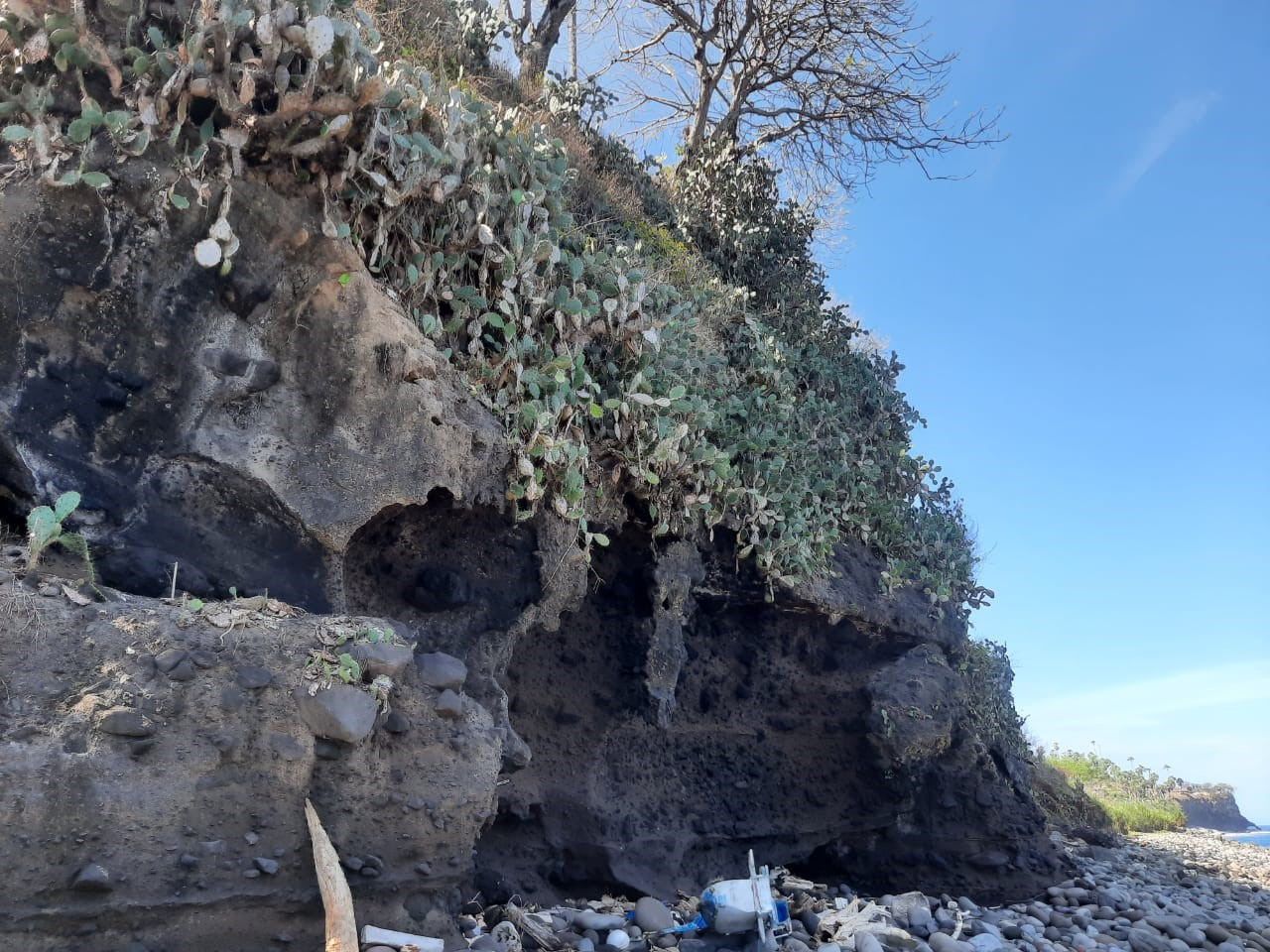
If you are planning to build on Bali’s coastline or clifftop, this Bali soil testing guide is the most important document you will read before your project begins. Coastal and cliff construction in Bali carries geotechnical risks that are fundamentally different from standard inland sites, and understanding those risks early protects both your investment and your structure’s long-term safety.
This guide covers everything you need to know: the geological challenges specific to Bali’s coastal and cliff zones, the correct testing methods, applicable standards, and how Indo Soil helps developers, architects, and landowners navigate every stage of the investigation process across Bali, NTB, and NTT.
Why Coastal and Cliff Construction in Bali Demands a Dedicated Soil Testing Approach
Bali’s dramatic coastline and limestone cliffs attract some of the most ambitious construction projects in Southeast Asia. However, building in these zones without a proper Bali soil testing guide investigation exposes your project to risks that no structural engineer can mitigate after construction has started.
According to the International Society for Soil Mechanics and Geotechnical Engineering (ISSMGE), coastal and sloped terrain sites require specialised geotechnical investigation programmes that account for erosion, lateral earth pressure, groundwater fluctuation, and slope stability. These factors directly influence your foundation design, your drainage layout, and your overall construction budget.
Read Also
Ultimate Bali Soil Testing Guide for Coastal and Cliff Construction Projects
Geotechnical Analysis for Luxury Cliff Villas in Bali
Understanding the Geology of Bali’s Coastal and Cliff Zones
The southern cliffs of Bali, stretching from Uluwatu through Pecatu and Nusa Dua, sit predominantly on karstic limestone. This rock type is highly susceptible to dissolution and cavity formation, meaning the ground beneath your building can contain hidden voids that standard surface testing will not detect without a targeted boring programme.
In contrast, Bali’s northern coastal strip features soft marine clay with low bearing capacity and high compressibility. The ASTM D2487 soil classification standard categorises these as high-plasticity clays that are particularly vulnerable to differential settlement under structural loads. Consequently, any Bali soil testing guide for a northern coastal site must include laboratory analysis of soil samples, not just surface CPT data.
| Coastal / Cliff Zone | Soil or Rock Type | Primary Geotechnical Risk | Required Investigation Method |
|---|---|---|---|
| Uluwatu / Pecatu / Bukit | Karstic limestone | Subsurface cavities, irregular bearing | Deep boring SPT + cavity detection |
| Nusa Dua / Tanjung Benoa | Cemented limestone and sand | Variable compaction, scouring | CPT + boring with lab samples |
| North Bali coastal strip | Soft marine clay | Low bearing capacity, settlement | Boring SPT + laboratory analysis |
| Canggu / Berawa beachfront | Sandy alluvial and fill | Liquefaction potential, erosion | CPT sondir + groundwater assessment |
| Steep cliff faces (any region) | Mixed rock and residual soil | Slope failure, lateral movement | Boring SPT + slope stability analysis |
Read Also
Case Study: Soil Test Investigation in Pecatu, South Kuta Bali
Bali Soil Testing Guide: Coastal and Cliff Construction
The Correct Soil Testing Methods for Coastal and Cliff Sites in Bali
Selecting the right test method is central to any reliable Bali soil testing guide for coastal and cliff construction. The two primary methods used by Indo Soil are CPT (Cone Penetration Test / Sondir) and Boring SPT (Standard Penetration Test), each serving a distinct purpose depending on your site’s geology and your structure’s load requirements.
CPT Sondir provides continuous soil profiling from the surface downward and is ideal for identifying soft layers, loose sand, and abrupt soil transitions in coastal zones. According to ISSMGE technical guidelines on in-situ testing, CPT is particularly effective in stratified coastal deposits where layer boundaries need precise identification.
Boring SPT involves drilling a borehole to greater depths, typically 10 to 20 metres or more, and is essential for cliff sites where you need to verify rock depth, identify cavity zones, and collect soil samples for laboratory testing. For any structure taller than two storeys built near a cliff edge, boring SPT is not optional; it is required.
Slope stability analysis complements both methods on cliff and hillside sites. Indo Soil incorporates slope angle measurement, soil shear strength data, and groundwater level information to produce a stability assessment that your structural engineer can act on directly.
Need expert advice on which test your coastal site requires? Chat with the Indo Soil team on WhatsApp now and get a same-day recommendation.
Read Also
Electromechanical vs Mechanical Sondir CPT: Which Is Right for Your Project?
Boring Test Guide: Procedures and Foundation Interpretation
Professional Soil Test Bali: Sampling Procedures Explained
Indonesian and International Standards That Apply to Your Coastal Project
Every panduan uji tanah Bali investigation must comply with applicable Indonesian national standards and align with internationally recognised practices. The key Indonesian standards are SNI 2827 for CPT sondir testing and SNI 4153 for SPT boring, both issued by the Badan Standardisasi Nasional Indonesia.
For coastal and cliff projects, additional reference to Eurocode 7: Geotechnical Design is strongly recommended. Eurocode 7 provides detailed guidance on slope stability assessment, retaining structure design, and ground investigation scope for complex terrain, all of which are directly relevant to Bali’s clifftop and beachfront construction environment. Furthermore, compliance with these standards is increasingly required by banks, insurance underwriters, and international project financiers operating in Bali’s luxury property sector.
Read Also
How Well Do Soil Test Bali Recommendations Match Field Conditions?
How Soil Testing Protects Your Bali Property Investment
Indo Soil Service Packages for Coastal and Cliff Construction Projects
Indo Soil offers transparent, fixed-price packages designed to match the complexity of your specific site. All packages in this Bali soil testing guide service range are delivered within 5 to 7 working days and include certified reports in English and Bahasa Indonesia.
| Package | Starting Price | Key Inclusions | Best For |
|---|---|---|---|
| Basic Soil Test | Rp 4,000,000 | 3 CPT sondir points (0–5 m), PDF report in English and Bahasa Indonesia | Small villas, early feasibility assessment |
| Business Starter | Rp 7,500,000 | Topographic survey + 3-point soil test, PDF and CAD (DWG) output | Combined site investigation and layout planning |
| Topographic Survey | Rp 4,500,000 | GPS/Total Station elevation survey, contour map DWG and PDF, benchmark points | Cliff and slope cut-and-fill design, drainage planning |
| Deep Boring SPT | Custom quote | 10–20+ m borehole, SPT, soil sampling, lab analysis, slope stability report, foundation recommendation | Cliff villas, multi-storey resorts, commercial coastal developments |
For a customised quote based on your exact site location and project scope, contact Indo Soil at soiltest.zayra.web.id/contact.
Common Mistakes Developers Make on Coastal and Cliff Sites in Bali
Even experienced property developers in Bali sometimes overlook critical steps when building near the coast or on cliff terrain. This Bali soil testing guide section highlights the most frequent and costly errors so you can avoid them entirely.
Assuming cliff rock is uniformly strong. Limestone in Bali’s Bukit Peninsula looks solid from the surface but often contains dissolution channels and voids at depths of 3 to 10 metres. A boring programme specifically targeting cavity detection is therefore essential before any pile design is finalised on a cliff site.
Ignoring groundwater and tidal influence. On beachfront and coastal sites, groundwater levels fluctuate with tidal cycles and seasonal rainfall. This directly affects bearing capacity, lateral earth pressure on retaining walls, and the risk of soil liquefaction during seismic events. The ASTM D4186 standard for consolidation testing addresses how groundwater conditions must be factored into settlement calculations for saturated coastal soils.
Using too few test points for irregular terrain. On a flat inland plot, three CPT points may suffice. On a cliff or coastal slope, soil conditions vary dramatically across short horizontal distances. Indo Soil’s guide on optimal CPT spacing for Bali soil testing explains how to determine the correct number of test points for your site geometry.
Skipping slope stability assessment. A foundation design that ignores slope stability on a cliff site can result in catastrophic structural failure even if the bearing capacity appears adequate. Slope stability must be assessed using shear strength data from laboratory-tested soil samples, not estimated from CPT readings alone.
Read Also
10 Fatal Mistakes That Happen When You Skip Soil Testing
How to Avoid Contractor Disputes Caused by Soil Issues in Bali
Soil Test and Slope Analysis in Carang Sari, Petang Bali
Real Project Examples: How Indo Soil Supports Coastal and Cliff Construction in Bali
Indo Soil has completed geotechnical investigations across Bali’s most challenging coastal and cliff environments. These real project experiences form the practical backbone of this Bali soil testing guide.
At a luxury villa development in Uluwatu, Indo Soil identified a significant cavity zone at 6 metres depth during a boring programme that the client had initially planned to skip in favour of a CPT-only investigation. The discovery allowed the structural engineer to redesign the pile layout before construction began, avoiding an estimated Rp 800 million in remedial foundation costs.
At a beachfront eco-resort in Berawa, soft sandy fill overlying marine clay was identified at shallow depth. The investigation data led directly to a raft foundation recommendation that distributed the structural load effectively across the compressible layer. See related case studies from Indo Soil’s project portfolio below.
Read Also
Soil Test for Berawa Signature Project, Canggu
Soil Test in Seminyak and Kerobokan
Soil Test for a Residential Project in Canggu
Conclusion
This Bali soil testing guide for coastal and cliff construction gives you a clear, actionable framework for every stage of your geotechnical investigation. From understanding Bali’s limestone cliff geology and soft coastal clays, to selecting the right test method, complying with SNI and Eurocode 7 standards, and avoiding the most common field mistakes, each section of this guide builds toward one goal: helping you build safely and confidently on Bali’s most demanding terrain.
Therefore, whether you are developing a single cliff villa in Uluwatu or a multi-building beachfront resort in Canggu, Indo Soil brings the expertise, equipment, and certified reporting you need to move forward with confidence. Contact the Indo Soil team today at soiltest.zayra.web.id/contact and receive your customised investigation proposal within one working day.
Frequently Asked Questions: Bali Soil Testing Guide for Coastal and Cliff Sites
1. Is a standard CPT sondir test sufficient for a cliff villa in Uluwatu?
In most cases, CPT sondir alone is not sufficient for Uluwatu cliff sites. Karstic limestone frequently contains voids and dissolution zones that CPT cannot detect because the cone meets refusal on hard rock before reaching the cavity. A combined programme of CPT and deep boring SPT is the recommended approach for all cliff locations in the Bukit Peninsula.
2. How does tidal influence affect soil test results on beachfront sites?
Tidal fluctuation changes groundwater levels in coastal soils, which directly affects pore water pressure and effective stress during testing. Indo Soil schedules beachfront investigations to account for tidal conditions and notes groundwater levels at the time of testing in all reports. This data is essential for your structural engineer’s settlement and bearing capacity calculations.
3. Does a Bali soil testing guide report include slope stability analysis for cliff projects?
Yes, when a project is located on or near a cliff edge, Indo Soil includes slope stability assessment as part of the boring SPT investigation package. The analysis uses shear strength data from laboratory-tested samples and delivers a factor of safety assessment that your structural engineer can incorporate directly into the foundation and retaining wall design.
4. How many test points does a coastal site in Bali typically require?
The number of test points depends on the site area, structural layout, and terrain variability. For a standard beachfront villa plot, a minimum of three to four CPT points is recommended. For cliff sites or plots with irregular terrain, Indo Soil recommends a spacing assessment before fieldwork begins. You can read the detailed spacing methodology in Indo Soil’s CPT spacing guide for Bali.
5. Can a foreign investor or overseas architect commission a Bali soil testing guide investigation remotely?
Absolutely. Indo Soil regularly works with international clients who manage their Bali projects remotely. You can initiate the engagement via WhatsApp or the contact form at soiltest.zayra.web.id/contact. Indo Soil handles all site coordination, fieldwork scheduling, and report delivery in English, so you stay fully informed throughout the process regardless of your location.
