
Among developers and property owners in Bali, questions about whether a soil test is truly necessary still arise. The answer, based on international geotechnical standards and local ground conditions, is always yes. This article outlines 6 clear reasons soil test essential Bali projects cannot afford to skip, from geology to permit compliance and long-term investment protection.
Understanding these reasons helps you make informed decisions before committing to any construction plan. Whether you are building a private villa, a boutique resort, or a commercial development, the ground beneath your structure must be understood before work begins.
A soil test is not an optional step. According to ASTM D5778-20, the standard method for electronic cone and piezocone penetration testing, subsurface investigation is the foundation of safe geotechnical design. Skipping it introduces risk that no amount of structural engineering can fully compensate for.
#1: Bali Has Highly Diverse Geology
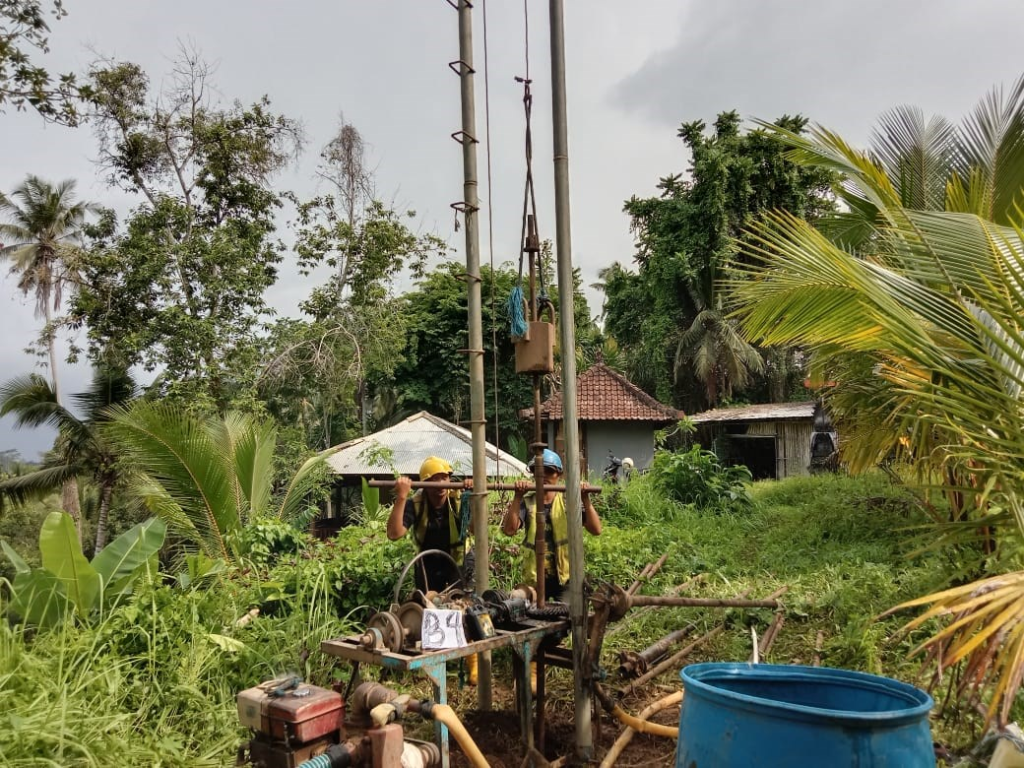
Within a radius of just 10 kilometres in Bali, soil types can shift dramatically from loose coastal sand to dense volcanic clay to limestone formations. Therefore, there is no universal foundation formula that applies across all locations on the island. Each plot requires individual assessment.
This geological diversity means that assumptions based on nearby structures are unreliable. Your neighbour’s building may sit on rock while your plot sits above saturated alluvium. Only a soil test reveals what is actually present beneath your specific land.
Soil Testing, Soil Strength and Types of Soil
Ultimate Bali Soil Testing Guide for Coastal and Cliff Construction Projects
| Soil Type in Bali | Typical Location | Key Risk | Recommended Test |
|---|---|---|---|
| Soft coastal alluvium | Seminyak, Canggu, Sanur coast | Low bearing capacity, settlement | CPT / Sondir |
| Volcanic ash and tuff | Kintamani, Tabanan, inland zones | Variable compressibility | CPT + Grain Size Analysis |
| Limestone and karst | Uluwatu, Nusa Dua, Pecatu | Cavity and sinkhole risk | Boring Test + GPR |
| Dense clay | Ubud, hill terraces | Shrink-swell behaviour | CPT + Lab Analysis |
| Reclaimed or filled land | Kuta, coastal development zones | Unknown fill depth, instability | CPT + Boring (SPT) |
#2: Earthquake and Liquefaction Risk
Bali sits within one of Southeast Asia’s most active seismic zones. Water-saturated sandy soils found along coastal areas are particularly vulnerable to liquefaction during major earthquakes, a process where soil temporarily loses its strength and behaves like a liquid.
According to USGS, liquefaction risk is directly tied to soil saturation, grain size, and density, all of which are measurable through a soil test. Furthermore, Eurocode 7 (EN 1997-1) requires that geotechnical investigation precede structural design on all sites where seismic risk is relevant.
Consequently, a Cone Penetration Test helps identify liquefaction potential at depth, so your structural engineer can design appropriate mitigation before construction begins, not after damage occurs.
#3: PBG and SLF Permit Requirements
A valid soil test report is a mandatory technical document for PBG (Building Approval) and SLF (Operational Worthiness Certificate) applications in Indonesia. Without it, the permitting process cannot be completed, and your construction cannot proceed legally.
The International Society for Soil Mechanics and Geotechnical Engineering (ISSMGE) has established international reference procedures for CPT testing that align directly with Indonesia’s SNI 2827:2008 standard, which governs sondir testing for local compliance purposes.
Accordingly, submitting a certified geotechnical report produced by a professional firm supports both local regulatory requirements and international engineering best practice. Indo Soil delivers bilingual reports in English and Bahasa Indonesia within 5 to 7 working days.
Professional Soil Test Bali: Sampling Procedures Explained
Why Clients Choose Indo Soil for Soil Testing in Bali
Need a Certified Soil Test Report for Your Permit?
Indo Soil delivers bilingual geotechnical reports accepted for PBG and SLF applications across Bali, Lombok, NTB, and NTT.
#4: Construction Cost Efficiency
One of the most compelling reasons soil test essential Bali construction projects depend on is direct cost savings. Early-stage soil testing can reduce construction costs by 5 to 20 percent through optimal foundation selection, avoiding overengineered or underprepared foundation systems.
Correcting a wrong foundation after a building is already standing costs significantly more than the test itself. According to FHWA Geotechnical Engineering Circular No. 5, accurate soil data at project inception is the most cost-effective investment in any construction programme. Therefore, a soil test is not an expense. It is a financial safeguard.
10 Fatal Mistakes That Happen Without Soil Testing
How Soil Testing Protects Your Property Investment in Bali
#5: Long-Term Investment Protection
Property in Bali represents significant capital investment. Structural failure caused by inadequate foundation design can reduce a building’s market value substantially and create legal liability for developers and owners alike. A soil test protects that investment from the ground up.
ISSMGE guidelines emphasise that subsurface investigation reduces long-term risk across the full lifecycle of a structure. Moreover, buyers, investors, and insurance providers increasingly require documented geotechnical data before approving transactions or coverage on commercial and high-value residential properties in Indonesia.
What Every Bali Property Investor Must Know About Soil Conditions
Soil Test for North Bali Property Investment 2026
#6: Increasing Professional Standards in Bali
Bali’s construction sector is maturing rapidly. Architects, structural engineers, and developers now routinely require geotechnical data before signing off on any design. This shift reflects growing alignment with international standards such as ASTM D3441 for mechanical CPT and ISO 22476-1 for electrical cone penetration testing.
As a result, projects that lack a soil test face increasing difficulty securing professional collaboration. Structural engineers in particular rely on CPT and boring test data to dimension piles, design raft foundations, and calculate settlement. Without this data, they cannot produce a responsible design.
Electromechanical vs Mechanical Sondir CPT in Bali
How to Determine Optimal CPT Test Point Spacing in Bali
#7: Soil Test Methods and What Each One Covers
Understanding which test to use is as important as understanding why testing is needed. The following table outlines the primary methods used by Indo Soil and when each one applies.
| Test Method | Depth | Best Application | Standard Reference |
|---|---|---|---|
| CPT / Sondir | 0 to 30 m | Soft soil profiling, liquefaction assessment | ASTM D5778-20 |
| Boring Test (SPT) | 5 to 30+ m | Deep foundation design, lab soil sampling | ASTM D1586 |
| Topographic Survey | Surface | Slope, drainage, cut-and-fill planning | GPS / Total Station |
| Geoelectric Resistivity | 0 to 50 m | Aquifer detection, underground cavity mapping | ISSMGE |
| Ground Penetrating Radar | 0 to 5 m | Utility mapping, buried object detection | ASTM D6432 |
Indo Soil Service Packages and Pricing
All Indo Soil packages include a certified bilingual report delivered within 5 to 7 working days with no hidden fees.
| Package | Price (IDR) | Includes | Best For |
|---|---|---|---|
| Basic Soil Test | Rp 4,000,000 | 3 CPT points (0-5 m), PDF report, foundation recommendation | Small villas, initial planning |
| Business Starter | Rp 7,500,000 | CPT 3 points + topographic survey, PDF and CAD output | Commercial and mid-size projects |
| Topographic Survey | Rp 4,500,000 | GPS/Total Station, DWG + PDF, benchmark points | Slope, drainage, and layout design |
| Custom / Large Projects | Contact for quote | Boring test, geoelectric, GPR, slope analysis | Resorts, cliff sites, complex terrain |
Make Soil Testing a Priority for Your Project
Each of the 6 reasons soil test essential Bali projects require coverage points to the same conclusion: testing before building is the single most rational investment you can make in your construction project. It protects you legally, financially, and structurally.
Indo Soil has completed over 100 projects and surveyed more than 3,000 hectares across Bali, NTB, and NTT. You can trust that your report is produced by experienced engineers, compliant with both Indonesian SNI standards and international ASTM and ISO frameworks.
Geotechnical Analysis for Luxury Cliff Villas in Bali
How Well Do Soil Test Bali Recommendations Match Field Conditions?
Soil Test Investigation: Pecatu, South Kuta, Bali
Start with a Free Consultation
Tell us about your land and we will recommend the most appropriate soil test method for your project. No commitment required.
Conclusion
These 6 reasons soil test essential Bali construction depends on are not theoretical. They reflect real conditions on the ground across the island: seismic risk, geological diversity, permit requirements, cost exposure, investment risk, and rising professional standards. Addressing each of them begins with one step: a professional soil test before you break ground.
Indo Soil is ready to support your project from the very first stage of planning. Our services cover CPT/Sondir, boring test (SPT), topographic survey, geoelectric survey, GPR, and slope stability analysis. Every report is transparent, certified, and delivered in both English and Bahasa Indonesia.
Contact Indo Soil today for a free consultation and let us identify the right soil test approach for your specific site in Bali.
Frequently Asked Questions
Q1: Is a soil test legally required before building in Bali?
Yes. A certified geotechnical report is required as part of the technical documentation for PBG and SLF permit applications in Indonesia. Without a valid soil test report from a professional firm, your permit submission will be incomplete and cannot be processed by local authorities.
Q2: What is the most common soil test used in Bali?
The CPT (Cone Penetration Test), also known locally as the Sondir test, is the most widely used method. It produces a continuous soil profile from surface to target depth and is governed by ASTM D5778-20 internationally and SNI 2827:2008 locally. It is fast, accurate, and suitable for most residential and commercial sites.
Q3: How long does a soil test take in Bali?
Field work for a standard 3-point CPT can typically be completed in one working day. Indo Soil then delivers the certified report within 5 to 7 working days from the date of testing, in both PDF and CAD formats.
Q4: Can I use the same soil test report for multiple buildings on the same plot?
This depends on the plot size and soil uniformity. For larger plots or those with varied terrain, additional test points may be required. Indo Soil will assess your specific site and recommend the optimal number and spacing of test points. Learn more about CPT test point spacing in Bali.
Q5: What is the difference between a CPT and a boring test (SPT)?
A CPT pushes a cone-tipped rod continuously into the ground and records resistance at each depth, producing a detailed soil profile without extracting samples. A boring test drills a borehole and collects physical soil samples at intervals for laboratory analysis. CPT is faster and ideal for soft soil profiling. SPT is used when deeper investigation or physical samples are required for structural design. Read the full Boring Test guide here.
